Why Use a Temporary Email Address (and When Not To)
Disposable inboxes keep spam, trackers and breach exposure away from your real address. Here is what a temporary email is good at, where it fails, and how TempX works.
NewKitApp 4 min de lecture
Nos guides existent en anglais et en indonésien. Les articles ci-dessous s'ouvrent en anglais.
Every second website wants your email address before it hands you anything: the whitepaper, the invoice copy, the free trial, the concert tickets as a PDF. Most of the time you want the document, not the relationship. That is exactly the gap a temporary email address fills.
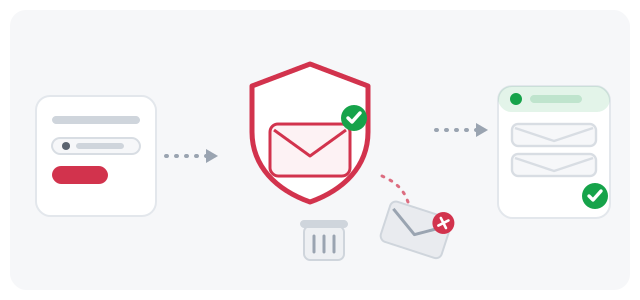
What a temporary email address is
A temporary, or disposable, email address is a real inbox that lives for a short time and is not tied to your identity. You get an address instantly, without registering an account, and anything sent to it shows up in a web inbox. When you are done, you throw it away. No forwarding to your main account, no recovery chain, no permanent record linking the address to you.
The point is not to hide who you are from everyone. It is to keep your primary address, the one that matters, out of the databases that eventually leak, get sold, or simply never stop emailing.
Five situations where it clearly wins
One-off downloads and gated PDFs. A report, an ebook, a spec sheet. You want the file once. Give the form a disposable address, download the PDF, done. If the file turns out to be huge, you can shrink it afterwards with Compress PDF without uploading it anywhere.
Trying a newsletter or a product. You are curious whether the weekly digest is worth it. Try it from a disposable inbox for two weeks. If it is noise, the address dies and the noise dies with it. If it is gold, subscribe properly from your real address.
Selling things online. Marketplaces and classifieds expose your address to every stranger who clicks "contact seller". A disposable address keeps the negotiation real but short-lived, and your main inbox stays quiet after the item sells.
Testing your own sign-up flow. If you build websites or QA them, you need a fresh address for every registration test. Disposable inboxes are the standard tool for this, because creating them takes seconds and leaves nothing to clean up.
Containing breach exposure. Addresses submitted to old, forgotten services are the ones that show up in breach dumps and phishing lists. A disposable address that no longer exists cannot be phished. For the accounts you do keep long-term, protect the documents they send you: tax files and bank statements deserve Protect PDF before you store or share them.
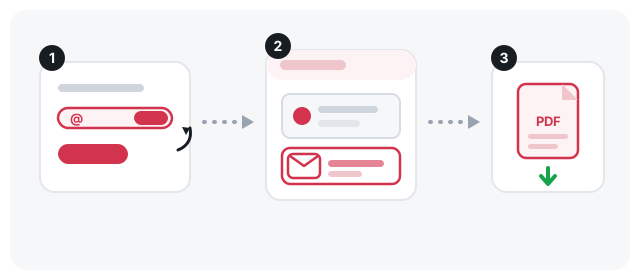
TempX: a disposable inbox in one click
TempX is a temporary email service from the same team behind this site. The design goal was simple: open the page, get an inbox, use it. There is no registration, no password to invent and forget, and no personal data to hand over, because there is no account at all.
You can pick a random address or type your own username, and the inbox updates as messages arrive. Verification links, order confirmations, invoice PDFs and ticket attachments all land there. When the address expires, everything in it disappears with it. The same privacy rule applies as with the tools here: what you receive stays in your browser session, and the address is not tied to you.
When a temporary address is the wrong tool
Disposable inboxes fail in one specific way: they are disposable. Never use one where the address has to work next year.
- Banking, government and health accounts. These send password resets, alerts and legal notices for years. If the inbox is gone, you are locked out at the worst possible moment.
- Anything you want to keep. Subscriptions, cloud storage, domain registrars. Losing access means losing the account.
- Sending, not just receiving. Most disposable services, TempX included, are built for receiving. Use your real address when you send anything that matters.
- Identity verification. Some services block disposable domains precisely because they verify identity through email. That is their right, and a disposable address will not get past it.
The practical pattern is separation: your real address for the ten services that run your life, disposable addresses for the hundred that do not.
A simple hygiene routine
- Use one disposable address per service, so a leak tells you exactly which service leaked.
- Download what you need, especially attachments, and let the inbox expire. Merge related files with Merge PDF if a signup spread them across five emails.
- Keep long-term documents out of any inbox, temporary or not. Download, then organize. Flatten filled forms with Flatten PDF so the answers survive storage and copying.
- If a service demands an address that will exist later, that is a service worth your real one.
Your primary inbox should contain mail you chose to receive. Everything else can happen somewhere that quietly disappears.